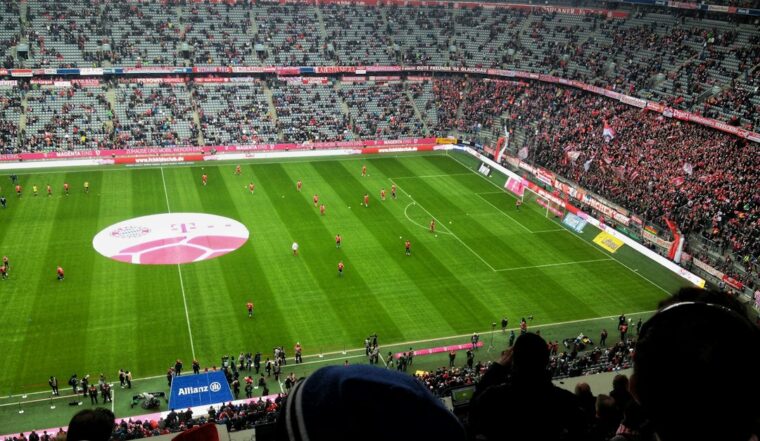
The Bundesliga is one of the most closely watched football leagues in Europe, and for good reason. With its high-scoring matches, intense tactical battles, and a competitive structure that regularly produces surprises, the German top flight offers rich material for football analysis. This article explores how Bundesliga predictions are formed, what data analysts examine, and how the various football markets are defined and understood.
Table of Contents
What Makes the Bundesliga Distinct for Match Analysis
Few leagues in European football produce as many goals per game as the Bundesliga. The average goals-per-match figure has historically sat above three across many recent seasons, making it a league where attacking statistics carry significant weight in any analytical framework.
The structure of competition also matters. Unlike some leagues where one or two clubs dominate entirely, the Bundesliga often sees four to six clubs capable of finishing in the top four, which means mid-table form swings, rotation policies, and Europa League commitments all become important contextual factors when forming a prediction.
Analysts also pay close attention to home and away splits. Bundesliga clubs have shown notable differences in their attacking output and defensive organisation depending on venue, with certain clubs performing considerably better in front of their own supporters. These splits inform how analysts approach individual match forecasts rather than simply looking at a team’s overall form.
Key Data Points Used in Bundesliga Predictions
Recent Form and Head-to-Head History
Form over the last five to six matches gives analysts a snapshot of momentum. A club that has conceded in four consecutive matches will be treated differently to one that has kept three clean sheets in the same period. Beyond recent form, head-to-head history between two specific clubs can reveal persistent patterns — some Bundesliga rivalries consistently produce high-scoring encounters regardless of current league position, while others tend toward tight, low-scoring affairs.
Injuries and Suspensions
Squad availability is one of the most consequential factors in any Bundesliga prediction. A key central midfielder missing through injury, a first-choice striker suspended, or a goalkeeper replaced by an inexperienced deputy can materially alter how a match is likely to unfold. Analysts track confirmed injury reports and suspension accumulations through official club communications and league databases ahead of each matchday.
Tactical Context and Manager Decisions
Tactical analysis adds another layer. Some Bundesliga managers employ a high defensive line, pressing intensively, which opens space for counter-attacks. Others prioritise defensive compactness in away fixtures while pushing higher at home. Understanding these tactical tendencies allows analysts to form more considered views on likely match patterns, including how the game might flow rather than just who might score.
Understanding the Football Markets in Bundesliga Analysis
When analysts and prediction platforms discuss Bundesliga matches, they reference several standard football markets. These are not strategies but simply defined ways of framing a potential match outcome.
The 1X2 market is the most familiar. It covers three outcomes: a home win (1), a draw (X), or an away win (2). Every Bundesliga match can be assessed through this lens using form, league position, and head-to-head data.
The Over/Under market focuses on the total number of goals in a match. Over 2.5 goals, for instance, means a match must contain three or more goals. Given the Bundesliga’s historically high-scoring nature, this market is widely analysed, particularly for clubs with both strong attacking outputs and porous defences.
Both Teams to Score, often abbreviated to BTTS, is a market asking simply whether both clubs will score at least once during the match. This is particularly relevant in Bundesliga fixtures where both sides have shown consistent attacking production, regardless of their overall league standing.
The Double Chance market covers two of the three possible 1X2 outcomes together. For example, a Double Chance selection of 1X covers a home win or a draw, while X2 covers a draw or away win. This market is frequently referenced in previews involving matches where the form gap between clubs is considered narrow.
Draw No Bet removes the draw from the equation. If the match ends as a draw, the selection is voided. This market is commonly discussed when analysts believe one side holds a form advantage but the possibility of a draw remains a consideration.
How Bundesliga Predictions Are Structured on Analysis Platforms
Platforms that publish Bundesliga predictions typically begin with a matchday overview, noting which fixtures carry the most analytical interest based on form, table position, and recent scoring patterns. Each individual preview will then assess the head-to-head record, current squad news, and the broader tactical context before identifying which market or markets appear most relevant to the specific match being examined.
The prediction itself represents an opinion formed through that analysis rather than a certainty. Football, particularly in a league as competitive and unpredictable as the Bundesliga, cannot be forecast with any degree of absolute certainty. What analysis does is structure the available information into a reasoned view of what is more likely to occur.
Match previews may also contextualise a fixture within the broader season narrative — for instance, whether a club is in a title race, pushing for European qualification, or managing a relegation fight. These pressures influence team selections, tactical approaches, and player motivation, all of which feed into a thorough Bundesliga prediction.
Frequently Asked Questions
What information goes into a Bundesliga match prediction?
Analysts typically examine recent form, head-to-head history, injury and suspension news, tactical tendencies, and the broader league context such as title races or relegation pressures. All of these factors are weighed together to form a match forecast.
What does the Over/Under market mean in Bundesliga analysis?
The Over/Under market refers to the total goals scored in a match. Over 2.5 goals means three or more goals must be scored. The Bundesliga’s historically high-scoring nature makes this one of the most frequently discussed markets in German football previews.
Why does head-to-head history matter in Bundesliga predictions?
Some Bundesliga rivalries consistently produce similar match patterns regardless of current form. A fixture that has produced high-scoring matches over many years, for example, provides useful context even when both clubs are going through a transitional period.
How does squad availability affect Bundesliga forecasts?
Missing key players through injury or suspension can significantly alter a team’s likely performance. Analysts treat confirmed absences as important variables, particularly when the absent player holds a central role in the club’s tactical system.
Predictions are opinions based on analysis, and no result is guaranteed. This website is for adults aged 18+ and is for information and entertainment only.
See the daily football predictions on the homepage.
