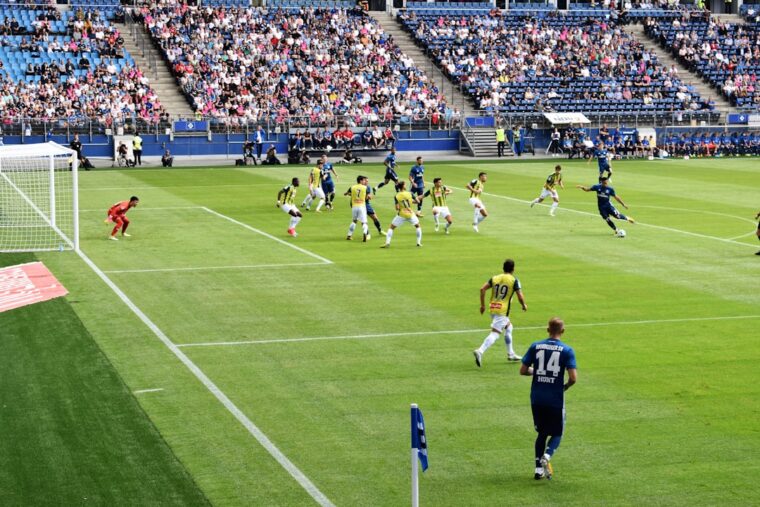
As of September 06, 2026, European football is in full swing again, and the question that separates casual punters from serious bettors is not simply “which team will win?” but rather “which league gives me the most exploitable edge?” The answer is more nuanced than most betting guides will admit. This is not a list of the most prestigious competitions. Prestige does not pay your bills. Predictability, market inefficiency, and data richness do.
Table of Contents
- Why League Selection Is Your First Real Betting Decision
- The Bundesliga — Structured Chaos That Rewards the Analytical Bettor
- Serie A — The Most Misunderstood League in Europe for Bettors
- The Eredivisie — Europe’s Hidden Value Market
- Ligue 1 — Volatility That Punishes the Lazy Bettor but Rewards the Disciplined One
Why League Selection Is Your First Real Betting Decision
Most bettors obsess over individual match analysis and completely ignore the foundational question: are they even betting in the right market? The league you choose to specialize in determines your access to sharp odds, the quality of available statistics, the consistency of refereeing patterns, and the depth of public data you can use to build an edge.
Bookmakers invest far more resources into pricing major leagues accurately. This cuts both ways. Premier League markets, for instance, are extraordinarily efficient because thousands of professional bettors, syndicates, and algorithmic traders hammer those lines into shape within minutes of release. Your edge in that environment shrinks accordingly.
The sweet spot sits between leagues that are too obscure (thin markets, unreliable data) and leagues that are too popular (razor-thin margins, over-corrected odds). Finding that middle ground is where the real money lives.
The Bundesliga — Structured Chaos That Rewards the Analytical Bettor
Germany’s top division has consistently delivered something unique among Europe’s elite leagues: high goal averages combined with meaningful positional hierarchies. Over the past three seasons, the Bundesliga has averaged just under 3.1 goals per game, the highest of any top-five European league. That makes it a particularly fertile environment for over/under markets and both-teams-to-score betting.
Home Advantage and the Bundesliga Pattern
What makes the Bundesliga especially interesting from a betting perspective is the unusually strong home advantage effect in matches involving mid-table sides. Teams finishing between 8th and 14th place at home have covered the spread at a rate that consistently outperforms bookmaker expectations. This is partly cultural — German stadium atmospheres are intense even for mid-tier clubs — and partly tactical, as Bundesliga coaches tend to set up more aggressively on home soil than their counterparts in Spain or France.
The actionable angle here is targeting home wins in the 1.7 to 2.1 odds range for mid-table Bundesliga sides rather than chasing the glamour fixtures.
Serie A — The Most Misunderstood League in Europe for Bettors
Italian football carries a reputation for defensive play that is now significantly outdated. Serie A’s tactical identity has shifted dramatically since 2022, with pressing-intensive systems becoming the norm under a new generation of coaches. Yet bookmakers still build their models with a partial legacy bias toward lower-scoring outcomes in certain fixture types.
The Draw Market Anomaly in Italian Football
Here is a statistic worth noting: Serie A still produces draws at a rate of approximately 27% of all matches, well above the European average of around 22%. However, the draw odds offered by bookmakers in Serie A frequently sit below the true probability implied by recent historical data. This gap creates consistent value in the draw market, particularly in matches involving two tactically conservative sides in the bottom half of the table.
The mid-season period, roughly from November through February, amplifies this effect. Teams managing injury crises tend to default to compact, low-risk structures, making draws far more likely than the odds reflect.
Asian Handicap Markets in Serie A
Another underexplored angle is the Asian handicap market in Serie A. Because Italian clubs often manage squad rotation strategically around European fixtures, line movement in AH markets can be slow to react. Spotting confirmed rotation news before the market adjusts is one of the most consistently profitable short-term edges available in European football right now.
The Eredivisie — Europe’s Hidden Value Market
The Dutch Eredivisie does not get the attention it deserves from a betting analysis standpoint. Ajax’s period of total dominance has given way to a more competitive league structure from 2024 onward, with PSV, Feyenoord, and increasingly AZ Alkmaar all capable of genuinely challenging for the title in any given season.
What makes the Eredivisie special for bettors is a combination of factors. First, the market is significantly less liquid than the Premier League or La Liga, meaning bookmakers adjust their models less dynamically. Second, the tactical culture in the Netherlands encourages expansive football, keeping goal averages high. Third, young player involvement is extremely high, creating genuine match-to-match variance that sharp bettors can model more accurately than bookmaker algorithms.
Targeting away wins in Eredivisie fixtures where travelling sides have clear individual quality advantages — particularly early in the season when home crowd effects are less established — has shown a positive return on investment across multiple recent campaigns.
Ligue 1 — Volatility That Punishes the Lazy Bettor but Rewards the Disciplined One
French football is a market that polarises bettors. PSG’s dominance for much of the last decade created artificially predictable title markets while simultaneously masking extreme unpredictability across the rest of the division. With the landscape shifting somewhat following squad restructuring, Ligue 1 is entering a period of greater competitive balance.
The key insight for 2026 is that Ligue 1’s bottom half is statistically among the most volatile in Europe. Expected goals models show a wider gap between xG and actual results in Ligue 1 than in any other major European league, suggesting the league overproduces results that defy statistical expectation. For the bettor who prioritises process over outcomes and can handle variance, this creates genuine long-term value — but only if you are disciplined enough to trust the model when it fails in the short run.
Frequently Asked Questions
Which European football league has the highest goal average for betting purposes?
The Bundesliga consistently leads Europe’s major leagues with an average close to 3.1 goals per game, making it excellent for over/under and both-teams-to-score markets.
Is it harder to find value in the Premier League compared to smaller leagues?
Yes. Premier League markets are among the most efficiently priced in the world due to high bettor volume and algorithmic trading. Smaller but data-rich leagues like the Eredivisie often offer more exploitable inefficiencies.
What is the best market to target in Serie A?
The draw market and Asian handicap markets both show consistent value in Serie A, particularly in matches involving mid-to-lower table sides and during periods of heavy squad rotation.
How does the Eredivisie compare to the Premier League for a beginner bettor?
The Eredivisie offers looser market pricing, making it easier to find value, but data access requires more research effort. It suits bettors willing to invest time in statistical analysis rather than relying on mainstream media coverage.
Should I specialise in one league or bet across multiple European leagues?
Specialisation generally outperforms diversification in sports betting. Developing deep expertise in one or two leagues allows you to spot market inefficiencies that casual bettors and even bookmaker algorithms miss.
